- Whetstone Weekly
- Posts
- THE WAR ON INVASIVES:
THE WAR ON INVASIVES:
3 Habitat-Destroying Plants You Need to Fight This Spring (Sericea Lespedeza, Johnsongrass & Multiflora Rose Control Guide)

Zack Vucurevich
February 26, 2026
Hey folks,
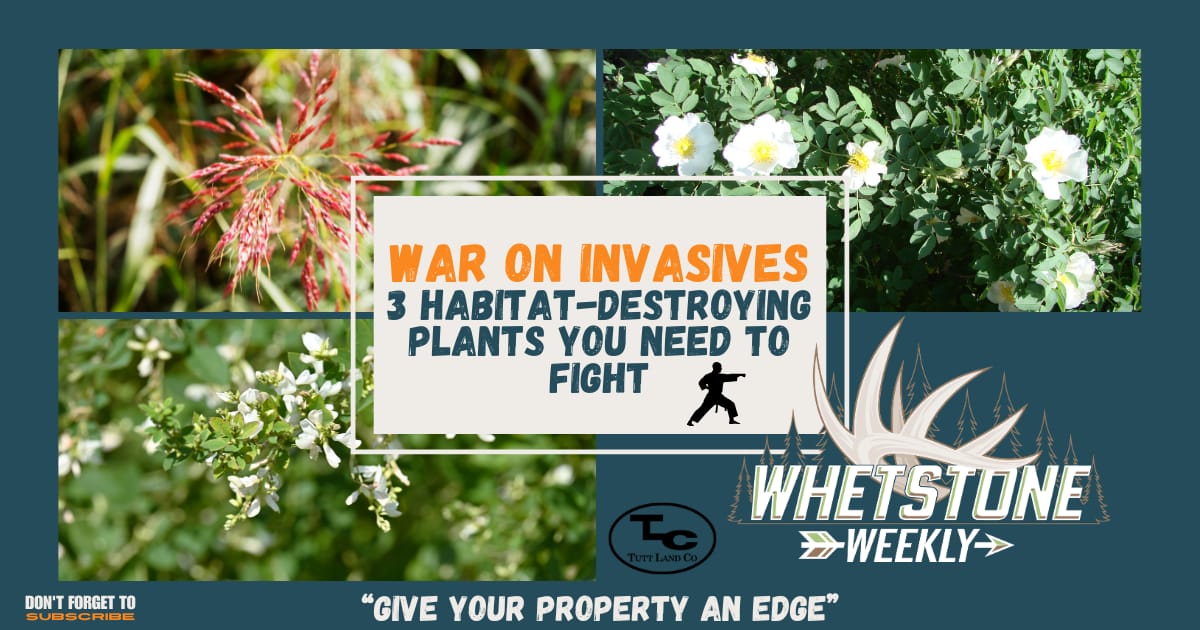
This week (February 23–27, 2026) marks National Invasive Species Awareness Week, a nationwide push to shine a light on the plants and animals that are quietly (or not so quietly) wrecking our native habitats. As someone who scouts land for clients across the Southeast, Mid-South, and Midwest, (whether it’s old fields, woodlot edges, rights-of-way, pastures, or food plots) I run into the same handful of invaders over and over. These three are the ones that make me reach for the spray tank, chainsaw, or wick applicator the fastest because they choke out native forage, ruin wildlife habitat, and turn productive ground into monocultures or thorny messes.
Here’s a quick rundown of the worst (vascular) offenders I deal with regularly, where you’re likely to find them across much of the eastern and central U.S., and the most effective ways to knock them back (drawing from recommendations by groups like the Invasive Plant Atlas, state extension services, and mostly personal experience). Always read and follow herbicide labels, wear proper PPE, and consider reaching out to your local county Extension office, invasive species coordinator, or NRCS rep for site-specific advice. Integrated management-combining targeted chemical, mechanical, and follow-up monitoring-is almost always the winning play. And remember, after you knock them back, replant or encourage natives to fill the gap and keep them from returning.
Right now in late February, as things start greening up, it's prime time to scout and plan attacks on these before they explode this spring.
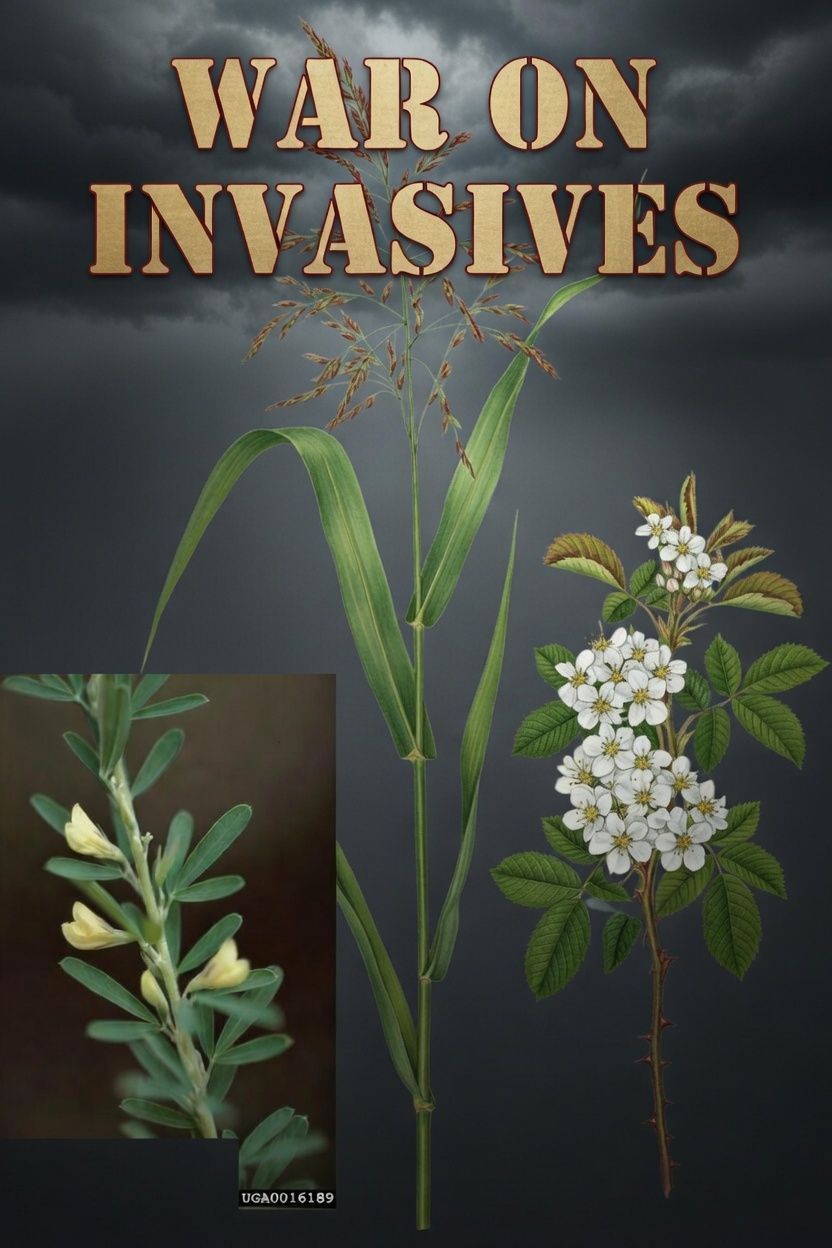
1. Sericea Lespedeza (Lespedeza cuneata) – “The Pasture Choker”
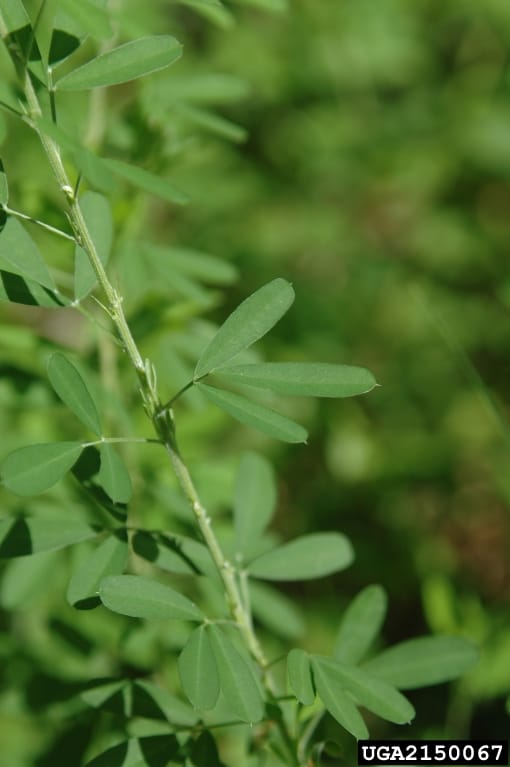
Sericea lespedeza
Where you’ll find it: Old fields, pastures, prairies, forest openings, dry upland woods, roadsides, rights-of-way, and pretty much any disturbed or low-fertility ground. In my experience scouting properties across the Southeast, Mid-South, and Midwest, this one shows up on nearly every site I visit. It's that widespread and aggressive. Once established, thriving on the kinds of marginal, disturbed soils that are common in ag land, edges, and old clearings. It was planted historically for erosion control, marginal forage, and (misguidedly) as “quail food” (spoiler: it’s terrible for quail).
Why it’s bad: Forms rock-hard dense stands from a woody root crown, shades out everything else, fixes nitrogen (which actually helps it take over poor soils), and the seeds last decades in the soil bank. Quail will readily eat the seeds—especially when other foods are scarce, but the tough seed coat makes them basically indigestible. Birds relying heavily on sericea seeds end up losing body weight because they burn more energy processing and passing the undigested hulls than they gain in nutrition. Studies on bobwhite quail show this can lead to critical weight loss (even fatal in severe cases), making it a net negative for our quail populations despite the old promotion as habitat.
How to eradicate it:
- Best timing: Mid-to-late summer (July–September) when it’s flowering for optimal control—plants are moving energy to roots, and metsulfuron shines here.
- Chemical (spot treatments preferred): Spot-treat patches with a backpack sprayer rather than broadcasting over your entire early successional habitat or native areas—this preserves desirable grasses, forbs, and cover while hitting the invaders hard. Go-to options:
- Metsulfuron (Escort XP, Cimarron, etc.): Spot mix at ~1 oz per 100 gallons (or 1 gram/gallon) + non-ionic surfactant (0.25%). Super selective on broadleaves, minimal impact on established warm-season grasses.
- Triclopyr (Remedy Ultra) or triclopyr + fluroxypyr (PastureGard HL): Spot mix at 1-2% solution (e.g., 1.25-2 oz per gallon) + surfactant. Thoroughly wet foliage to point of drip for best uptake.
- Glyphosate (2% solution, ~2.5 oz per gallon + surfactant) works for spot sprays but use cautiously in diverse habitats since it's non-selective—great for pure patches or where you don't mind some collateral.
Cover plants fully but avoid excessive runoff. For tiny seedlings, hand-pull if soil is moist and you get the root crown.
- Follow-up: Expect multiple years due to the seed bank—spot-treat regrowth annually. After knockdown, overseed with natives or competitive warm-season grasses to fill voids and prevent reinvasion.
- Pro tip: Avoid burning alone—it scarifies seeds and can worsen spread at edges. Integrated approach (spot herbicide + overseeding + monitoring) is key. Lespedeza loves fire.
2. Johnsongrass (Sorghum halepense) – “The Rhizome Monster”
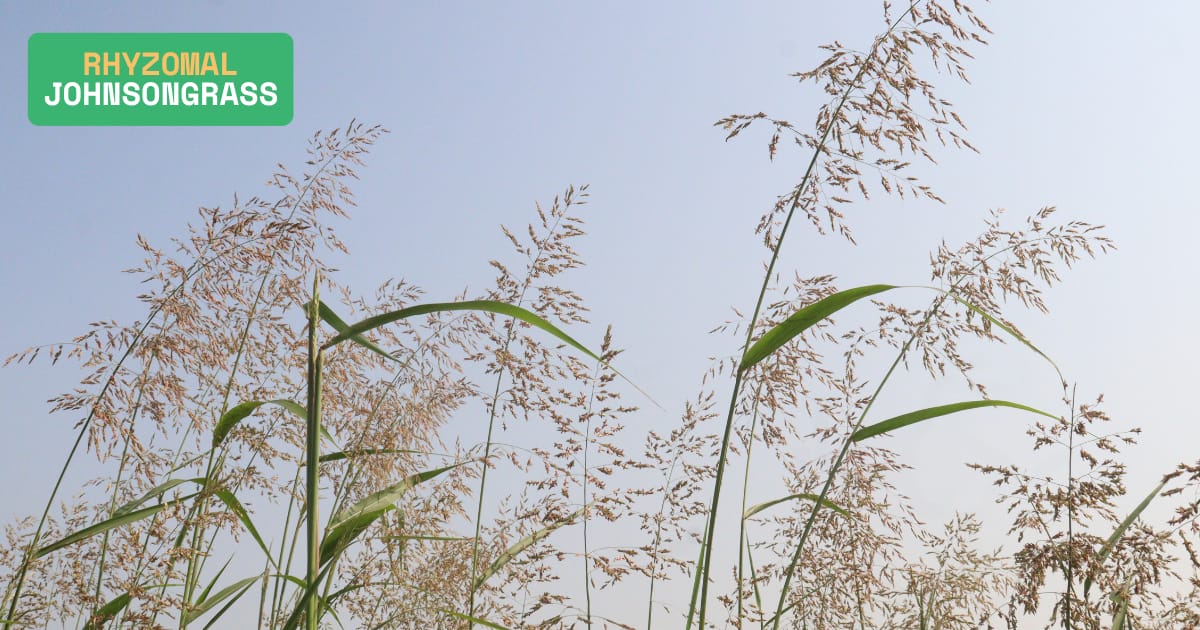
Where you’ll find it: Crop fields, ditches, roadsides, fence rows, waste areas, pastures, rights-of-way, food plots, and disturbed ground. It's a classic invader across the Southeast, Mid-South, and much of the Midwest, especially in ag land, along waterways, and in wildlife openings where it spreads aggressively via rhizomes and seeds. In my scouting, this one pops up on a ton of properties—once it gets going, it takes over fast.
Why it’s bad: Massive underground rhizome system (up to 8+ inches deep), produces up to 80,000 seeds per plant, and can be toxic to livestock under stress (e.g., wilted or frost-damaged). It outcompetes natives and food plot crops, reduces forage quality, and thrives in drought.
How to eradicate it:
- Best timing: Actively growing in summer, ideally when plants are 12-18 inches tall (before seed heads form) for best translocation to rhizomes. For wicking, wait until it's taller than surrounding vegetation.
- Chemical (spot treatments or selective tools preferred; broadcast Plateau for heavy salvage): Focus on targeted applications to protect desirable grasses, forbs, or food plot plants—don't blanket spray unless the infestation is extreme.
- Weed wick/wiper applicator (great for food plots and native areas): If johnsongrass is towering over your plot crops or other desirable vegetation, use a weed wick (rope wick, sponge, or pull-type wiper) to wipe herbicide directly on the tall stems/leaves. This is one of the best selective methods for food plots—apply only to the invaders while sparing shorter plants below. Fill with glyphosate (e.g., 33-50% solution, like 1:1 glyphosate:water, or up to full strength for tough stands) + surfactant if needed. Drive/walk slowly, run in two directions for even coverage, and adjust height so it contacts johnsongrass but not the good stuff. It's low-drift, efficient for scattered tall clumps, and has been a go-to for wildlife managers controlling johnsongrass without wrecking habitat.
- Plateau (imazapic) for heavy, field-wide salvage: When johnsongrass is so prevalent it blankets the area, broadcast 8–12 oz/acre postemergence (actively growing, 18–24 inches at whorl) + surfactant. It's tough on rhizomatous johnsongrass but tolerated well by Indian grass, big bluestem, and little bluestem (minimal long-term impact), while switchgrass can take a hit (stunting or thinning—avoid high rates or pure switchgrass stands). This has been one method I've had real success with when trying to salvage remaining native habitat—it's challenging to eliminate a dominant non-native warm-season grass without nuking the natives, but Plateau delivers in those overrun scenarios without the total wipeout of glyphosate broadcast.
- Glyphosate spot sprays: For smaller/scattered patches, backpack spot-treat with 2% solution (~2.5-3 oz per gallon) + surfactant. Thoroughly wet foliage but avoid runoff.
- Mechanical: Only for very small patches—dig up the entire root/rhizome wad (wear gloves; it's tough). Not practical for established stands. (I am not above taking the time to hand-pull a few unsightly bunches of J-grass out of my clover plots.)
- Follow-up: Multiple years needed to exhaust rhizomes—spot-treat or wick regrowth promptly. Prevent seeding by hitting before heads mature, then establish competitive natives or plot crops to crowd it out. (This stuff is persistent!! All of these are, unfortunately.)
- Pro tip: Fire often backfires (common theme, here): dormant or spring burns can actually make infestations worse by promoting regrowth from unharmed rhizomes. Repeated targeted treatments (wick, spot, or selective broadcast) + overseeding/competition is the winning integrated play.
3. Multiflora Rose (Rosa multiflora) – “The Thorny Thicket Maker”
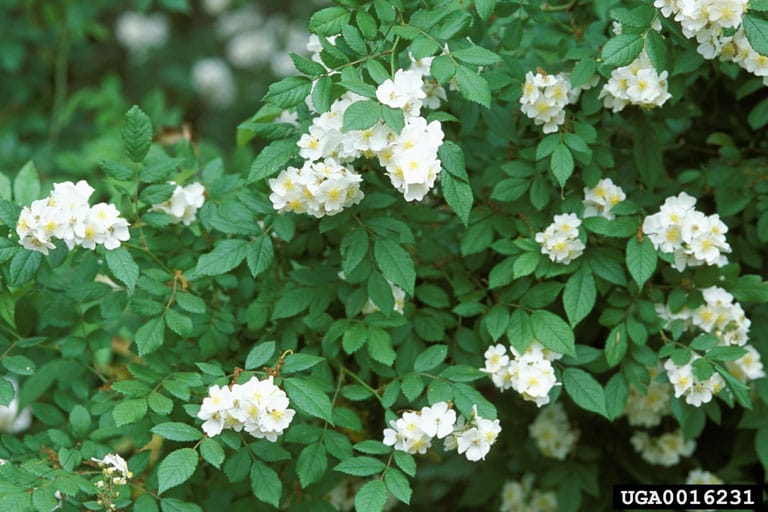
Where you’ll find it: Old fields, pastures, fence rows, forest edges, rights-of-way, woodland openings, and disturbed areas. It's incredibly common across the Southeast, Mid-South, and Midwest—I've run into thickets of this stuff on countless properties, often turning walkable edges and clearings into impassable green walls.
Why it’s bad: Forms dense, impenetrable thickets from arching canes that root where they touch the ground, shades out native plants and forage, reduces open ground for quail nesting and foraging, blocks deer trails and bedding areas, and spreads far via bird-dispersed hips. It was sold as a "living fence" and wildlife food source decades ago, but it's a net negative—creates barriers, lowers plant diversity, and displaces far better native brambles like blackberry and raspberry that provide superior berries, cover, and browse for quail, deer, turkey, songbirds, and pollinators without taking over everything.
Quick ID tip to avoid hitting natives: Before treating, make sure it's multiflora and not our beneficial native Carolina rose (Rosa carolina, aka pasture rose). Key differences:
- Flowers: Multiflora usually has clusters of small white (sometimes pale pink) flowers with bright yellow centers; Carolina rose has larger, deep pink flowers (though there's some overlap in color).
- Thorns/prickles: Multiflora has curved, hooking thorns (often described as "cat claw"); Carolina rose has straight prickles.
- Stipules (fringe at leaf base): Multiflora has distinctive hairy/feathery/fringed stipules (green fringe where leaf petiole meets the stem); Carolina rose lacks this fringe.
- Growth habit: Multiflora forms tall (up to 10-15 ft), arching, climbing thickets that can vine up trees; Carolina rose is a low-growing (1-3 ft), upright or colonial shrub without the rampant climbing.
Below is our native rose:
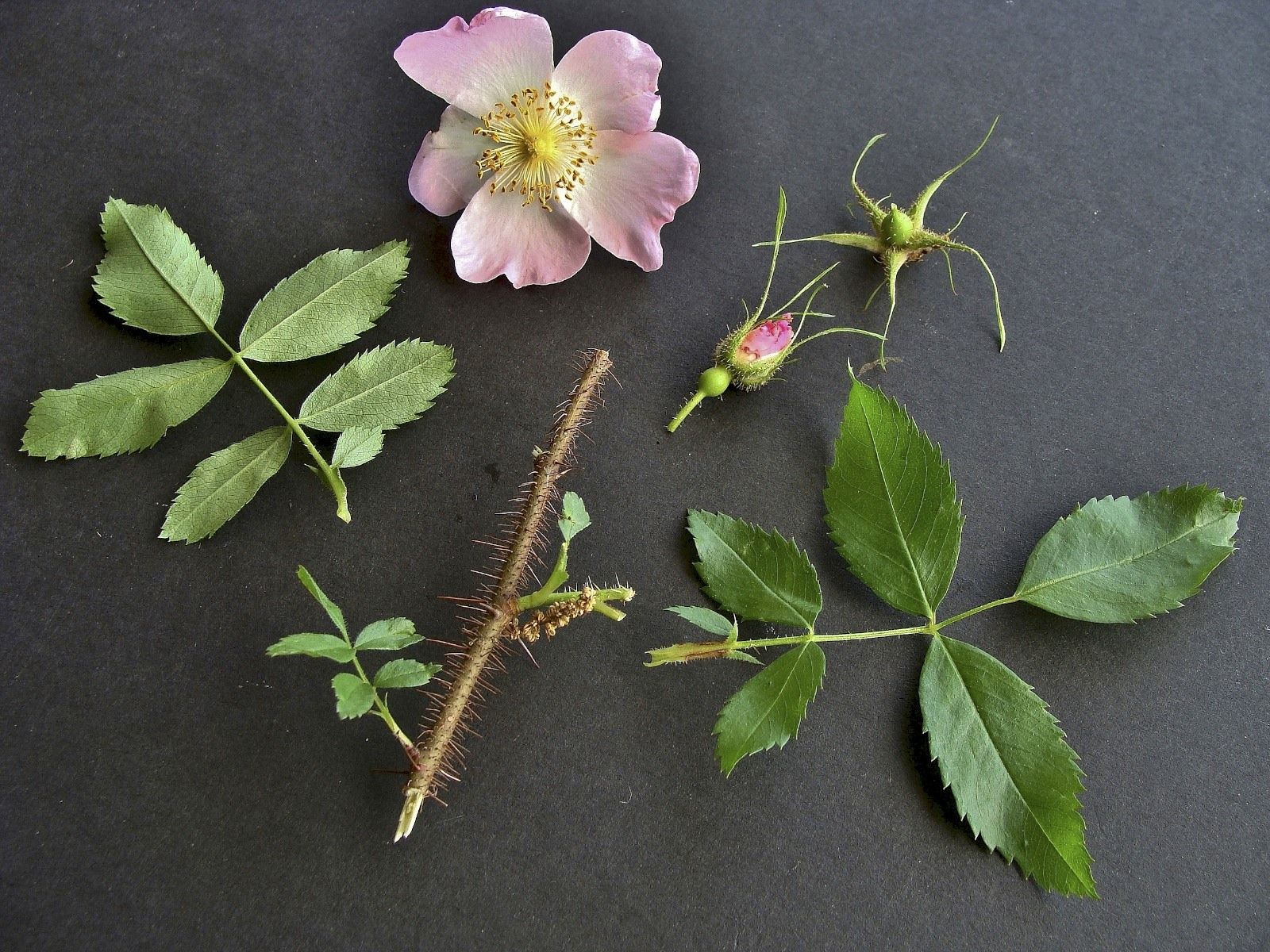
Carolina rose (Rosa carolina) – note the straight prickles and lack of fringed stipules compared to multiflora rose. (Credit – Arkansas Native Plant Society)
These traits make it easy to tell apart once you're close—always double-check before pulling the trigger on treatment.
How to eradicate it:
Best timing: Late fall through early spring (dormant season) for cut-stump or basal bark—minimal resprouting and no leaf interference. Growing season (late spring–early fall) for foliar spot if needed, after flowering but before heavy seed set.
Chemical (spot treatments preferred): Always go targeted to spare surrounding natives, grasses, forbs, or desirable brambles—backpack sprayer, wand, or paintbrush for precision; avoid broadcast unless it's a solid monoculture.
Cut-stump: Cut canes close to ground (wear heavy gloves and eye protection—the thorns are brutal), then immediately apply 25-50% glyphosate (e.g., Roundup) or triclopyr (Garlon 3A/Remedy) to the fresh stump surface (paint or low-pressure spray). This is highly effective with low regrowth.
Basal bark: For standing plants up to ~4-6 inches diameter, spray 20-30% triclopyr in horticultural oil (or ready-to-use like Pathfinder II) on the lower 12-24 inches of canes, year-round (ground not frozen). Great for thickets without needing to cut first.
Foliar spot: 2-2.5% glyphosate or triclopyr + surfactant on actively growing foliage—thoroughly wet leaves but target only rose to protect nearby plants.
Mechanical: Hand-pull small seedlings (get the whole root). Repeated mowing or cutting weakens mature plants over years but triggers resprouting—always follow cuts with herbicide. Goats/sheep can browse heavily for suppression but won't eradicate.
Follow-up: 2-3 years for seed bank and regrowth—spot-treat survivors promptly. After control, encourage or plant native brambles/blackberries/raspberries, warm-season grasses, or forbs to fill the space and prevent reinvasion—native brambles will thrive in the opened-up habitat and provide way more wildlife bang.
Pro tip: Avoid mowing/cutting alone in summer—it can spread cane fragments or stimulate suckers. Integrated spot herbicide + monitoring + natives is the way to go; knock this back and watch your habitat open up for better wildlife use.
General Advice for All of Them
Start with small infestations before they explode. Monitor for at least 2–3 years. Use targeted/spot methods to protect desirable natives and habitat—broadcast only when absolutely necessary for heavy cases (like johnsongrass fields). Replant or encourage natives right after treatment to close gaps. If you're on a bigger scale, look into cost-share programs through NRCS or your local soil conservation district.
Trade Show Season Shout-Out - NWTF & SCI Show
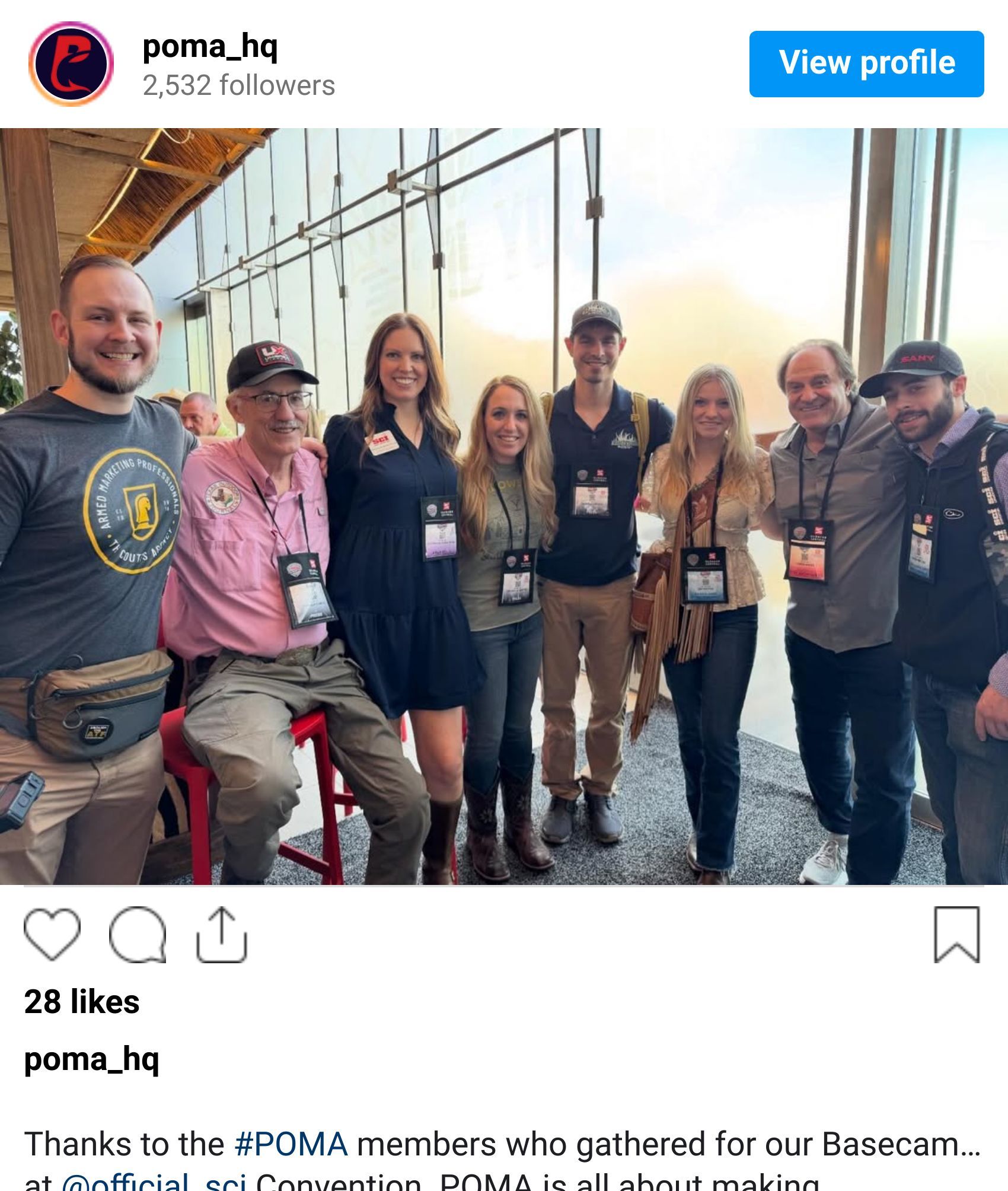
As spring ramps up and trade show season kicks off, it's a great time to highlight a couple of powerhouse organizations that are out there fighting to protect our hunting heritage, access, and habitat.
The National Wild Turkey Federation (NWTF) does an amazing job getting real habitat work on the ground across the country—restoring forests, improving pastures, creating openings, and boosting turkey, quail, and deer populations through on-the-ground projects, partnerships, and landowner support. (Bonus: As a member, you get Turkey Call magazine—last year I had an article published in it about thermal stress on poults, and it's a fantastic resource for conservation and turkey hunting insights.)
Safari Club International (SCI) excels on the policy front, defending hunters' rights both domestically and internationally—pushing back against anti-hunting legislation, import bans, and restrictions while advocating for ethical, science-based conservation worldwide.
Both groups host their big annual conventions right here in my home city of Nashville each year (NWTF at the Gaylord Opryland Resort, SCI at the Music City Center), drawing thousands of hunters, outfitters, conservationists, and industry folks for networking, gear, auctions, seminars, and inspiration.
If you're passionate about keeping our traditions strong, ensuring public lands stay open, or seeing more habitat improvements, consider joining NWTF, SCI, or both. Membership supports boots-on-the-ground work and policy wins that benefit all of us.
- Join or renew with NWTF here: https://www.nwtf.org/membership
- Join or renew with SCI here: https://safariclub.org/join-today
If you're interested in getting a professionally written habitat management plan for your property or exploring land listing opportunities, feel free to reach out via my contact page at Whetstone Habitat: whetstonehabitat.com.
Check them out—you'll be supporting the fight and likely making some great connections along the way.
That’s it for this week. Get outside, scout those invasives, and let’s keep our ground productive for deer, turkey, quail, and everything else that calls it home.
Give Your Property an Edge,
Zack Vucurevich
Whetstone Habitat & Tutt Land Company