- Whetstone Weekly
- Posts
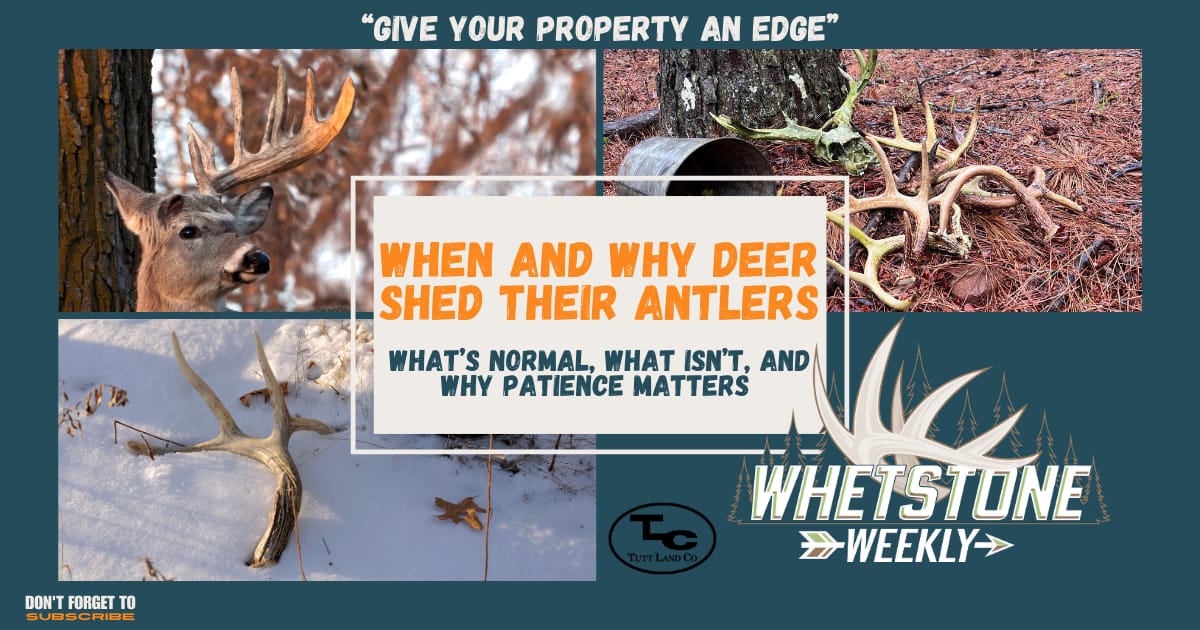
- When and Why Deer Shed Their Antlers
When and Why Deer Shed Their Antlers
What’s normal, what isn’t, and why patience matters

Zack Vucurevich
January 08, 2026
Every winter, like clockwork, my phone starts lighting up with the same questions.
Trail camera photos of bucks missing one antler. A buddy swearing a deer “dropped early.” A landowner worried that something is wrong because they found a shed in December. Someone calling to say they shot a buck and the antlers fell off after the shot. Or someone asking if they should already be out walking every acre of their farm looking for antlers.
Antler shedding has a way of creating unnecessary anxiety, especially among landowners who care deeply about their deer herd and the work they’ve put into their property.
The truth is, shed antlers are one of the most misunderstood parts of a whitetail’s annual cycle. When bucks shed, why they shed, and when it actually makes sense to start looking for antlers are all closely tied to biology, stress, and seasonal behavior, not rumors or social media timelines.
This article is meant to slow that conversation down.
Before we talk about where to find sheds (I’ll cover that in an upcoming Whetstone Weekly), it’s important to understand what actually causes antlers to fall off in the first place.

Why Bucks Shed Their Antlers
Antlers are not permanent structures. They are grown, carried, and shed every year in response to hormonal changes inside a buck’s body.
The primary driver behind antler shedding is testosterone. During the fall, testosterone levels rise leading into and through the rut. That hormone surge allows bucks to harden antlers, spar, and breed. Once the rut winds down, testosterone begins to fall. When it drops below a certain threshold, the connection between the antler and the pedicle starts to weaken.
What causes that testosterone drop is key.
The main trigger is photoperiod, or day length. As days shorten after the fall equinox, a buck’s endocrine system responds in a predictable way. This is why antler shedding tends to occur within a fairly consistent window from year to year, regardless of how mild or harsh the winter feels to us.
As testosterone declines, osteoclasts, which are bone-resorbing cells, become active at the base of the antler. These cells break down the bone tissue anchoring the antler to the skull until it eventually falls off.
Sometimes that happens quietly while a buck is feeding or bedding. Other times it happens during a jump, a minor impact, or even after a shot, which explains why antlers occasionally fall off immediately after harvest.
Stress can influence timing, but it is secondary. Severe weather, injury, illness, high deer densities, or prolonged nutritional stress can cause testosterone to drop faster in individual deer. Stress modifies the timeline, but it does not override photoperiod.
One last factor that often gets overlooked is individual variation. Some bucks are simply wired to shed earlier or later than others, and they tend to do it that way year after year, regardless of habitat quality.
When Bucks Typically Drop Antlers
Across most of the whitetail’s range, the majority of bucks shed their antlers sometime between January and February. That window represents what most landowners should consider normal.
December sheds do happen, but they are the exception rather than the rule. When they occur, they are often tied to individual stressors like injury or illness, or to bucks that were already on the early end of the shedding spectrum. Seeing one or two early sheds in a given year is not automatically a sign that something is wrong with your management program.
On the other end of the timeline, some bucks will carry antlers into March. These are often deer with later hormonal cycles or bucks that experienced less stress coming out of the rut. Late shedding does not necessarily indicate superior habitat, just as early shedding does not automatically signal poor conditions.
One observation I’ll cautiously share from years in the field is that some mature bucks appear to shed earlier than other deer. I don’t believe this is universal, and the exact reason isn’t entirely clear, but it’s something I’ve seen often enough to mention.
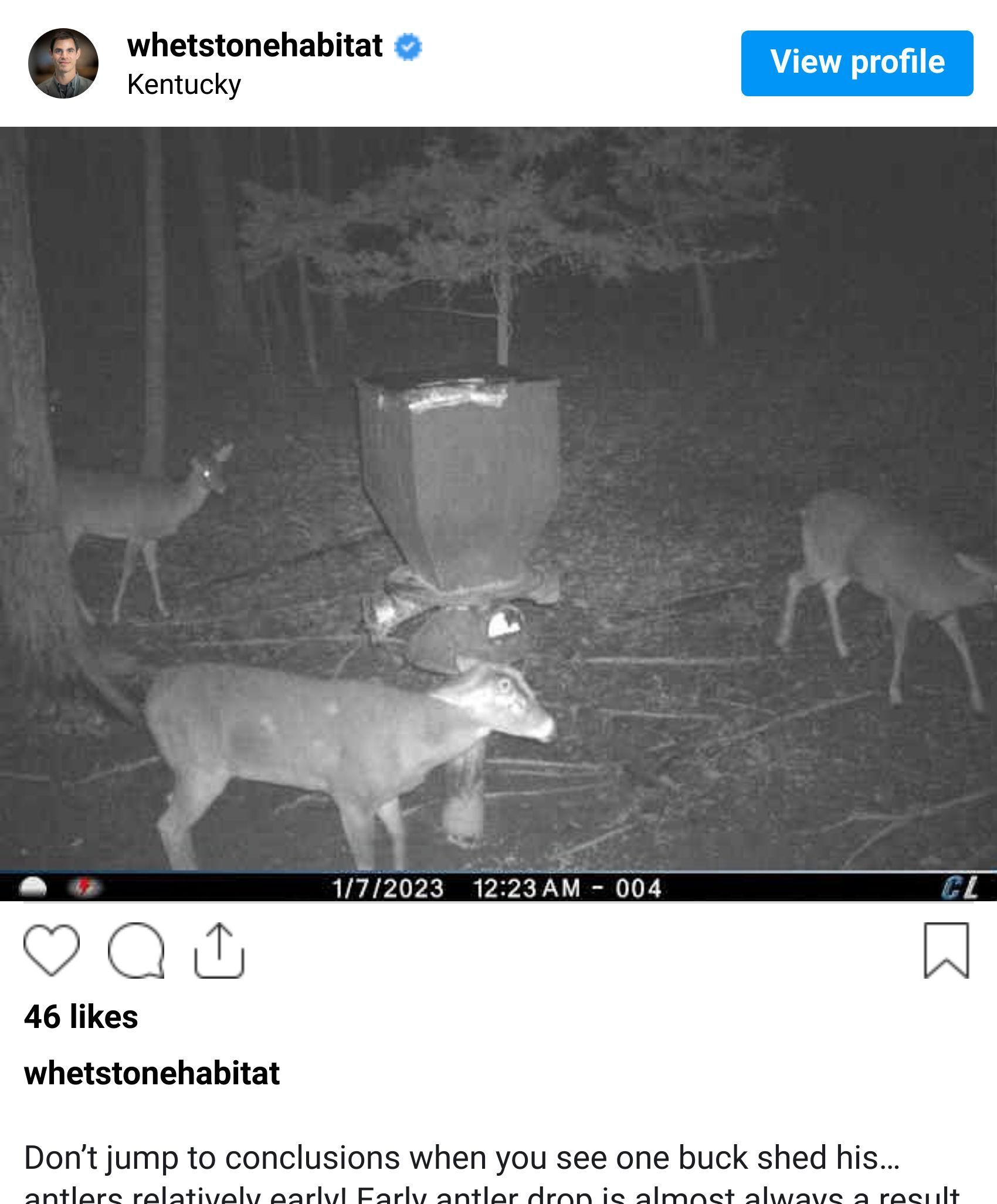
That observation is one of the reasons I always tell late-season doe hunters to slow down and triple-check their target before pulling the trigger on what looks like a big, lumpy-headed doe. Mature bucks that have already shed can be surprisingly easy to misidentify, especially in poor light or at longer distances.
It’s also important to remember that shedding is not synchronized. Bucks do not drop antlers all at once. It’s common to have fully shed bucks and hard-antlered bucks using the same property at the same time.
The key takeaway is that patterns observed over multiple years matter far more than anything that happens in a single winter.
Why Timing Matters in Late Winter
Late winter is arguably the most stressful period of the year for a whitetail.
By December, bucks are coming out of the rut already depleted. Mature deer can lose 15 to 20 percent of their body weight after weeks of breeding activity, elevated movement, and limited rest. That weight loss is immediately followed by the cold reality of December, January, and February, when food quality is diminished and energy demands are high.
This is survival season.
Food is king in late winter. If a property lacks a red oak acorn crop, productive perennial food plots, or reliable woody browse, deer are left chewing twigs and stems while waiting for spring green-up.
Every time deer are bumped from bedding cover during this period, it comes at a cost. Getting to their feet burns calories they cannot easily replace. Repeated disturbance can push deer into less secure areas or cause them to shift core areas entirely.
This is where early shed hunting can work against your goals.
One of the great ironies is that people often push bucks off their own property before those deer ever drop their antlers. When that happens, the sheds tend to end up somewhere else.
That doesn’t mean shed hunting is irresponsible. It simply means timing matters.
The Right Time to Start Looking for Sheds
The best time to start looking for shed antlers is not tied to a calendar date. It’s tied to what the deer on your property are actually doing.
Trail cameras are one of the best tools you have this time of year. Waiting until you’re confident that a majority of the bucks on your farm have shed their antlers is the most responsible approach. Seeing consistent groups of bucks without antlers tells you far more than a single early shed.
There’s nothing wrong with casually checking easy areas while you wait. Riding the buggy, glassing field edges, or making quick passes through food plots can turn up early sheds without adding much pressure. That’s very different from walking deep into bedding cover or grid-searching thick areas.
Until the timing is right, it pays to stay on established trails. Once most bucks have shed, you can expand your search with far less risk of pushing deer during the most stressful part of the year.
What Shed Antlers Can and Can’t Tell You
Shed antlers can be useful, but they’re often asked to carry more meaning than they should.
They confirm survival through the season and, over time, can help paint a general picture of age structure and antler potential. Finding matched sets can also provide insight into how individual deer use your property during winter.
What they can’t do is give you a complete inventory or tell the whole story in a single year. Some bucks shed elsewhere. Some antlers are chewed by rodents or buried under leaves or snow. Sheds are best viewed as one data point, not the data point.
Closing Thoughts
Shed antlers are a fascinating part of the whitetail’s annual cycle, but they’re best understood in the context of stress, survival, and long-term patterns rather than urgency.
If questions about shedding, late-winter stress, or timing have you second-guessing your property, that’s often a sign you care deeply about the land and the deer it supports. Turning that concern into better decisions and better timing is what separates reactive management from effective management.
If you’re interested in a deeper look at your property, I offer habitat consultations and full management plans focused on long-term herd health and realistic improvement. I also help clients buy, sell, and search for hunting properties in Tennessee, with an emphasis on finding land that has strong habitat potential from day one.
If you’d like to start that conversation, you can reach out through www.whetstonehabitat.com.
